Ludwig van Beethoven was a German composer who led the transition between Classical and Romantic music in the nineteenth century.
Beethoven was born on December 16, 1770 in Bonn, Germany. He was born into the profession of music, his father being a singer in the choir of the archbishop-elector of Cologne. His family was quite successful, but when his grandfather died in 1773, they became increasingly poor and his father slipped into alcoholism. Ludwig left school at age 11 and was the breadwinner of the family by age 18.
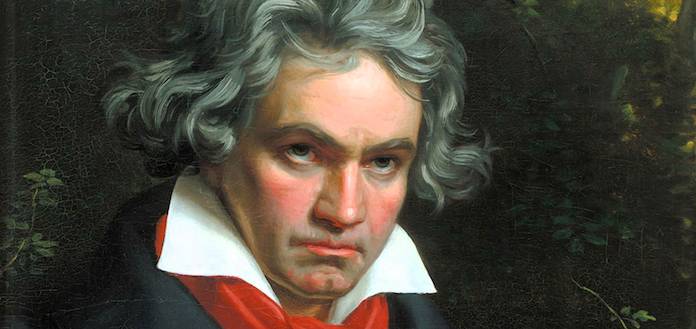
Ludwig’s father attempted to turn him into a child piano prodigy like Mozart, but was unsuccessful; Ludwig didn’t become skilled on the piano until his adolescence. In the 178os, he was appointed continuo player to the Bonn opera, and after four years he had made so much progress that the archbishop-elector sent him to Vienna to work with Mozart. This trip was cut short by the death of his mother, but nevertheless, Mozart was incredibly impressed with Beethoven’s potential as a pianist.
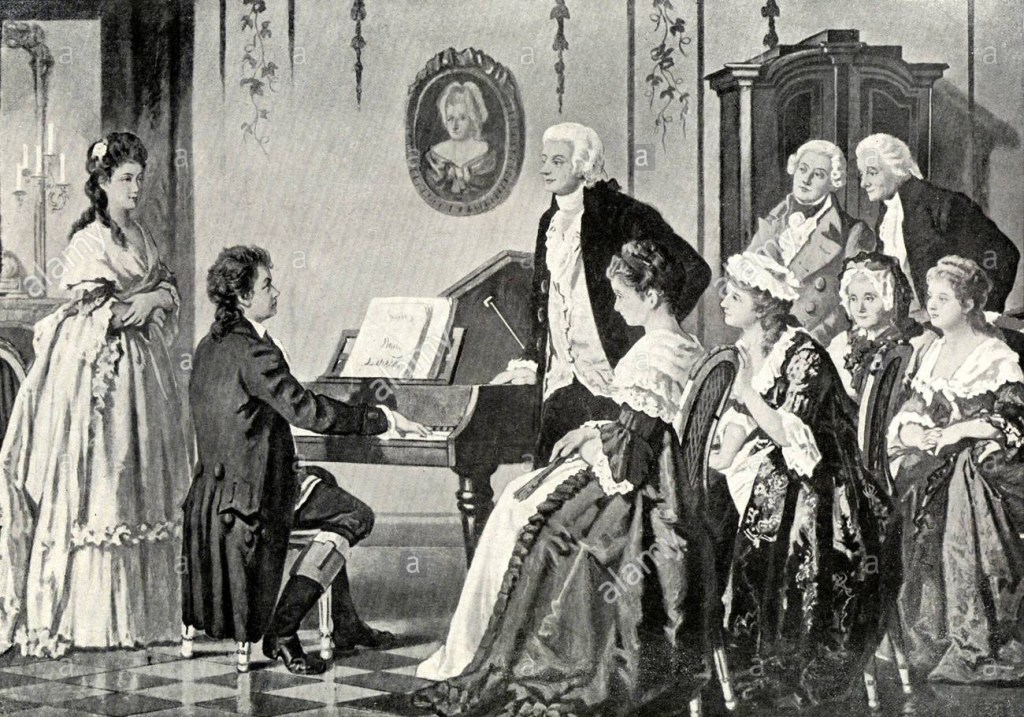
Throughout his late teens and early twenties, he composed a few pieces for the Bonn opera and sometimes played viola with them. He became known as one of the best musicians in Germany and Austria, and later took lessons with another famous composer, Haydn.
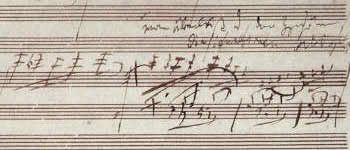
By 1800, Beethoven started to notice that he was going deaf. This was extremely difficult for him, as he had dedicated his entire life to writing and playing music. It came to the point where he almost took his own life. His deafness became total in 1819 and this was when he almost completely converted from playing piano to composing. He had several sketchbooks, many which have been conserved, where he wrote both his conversations with other people and his compositions.
Beethoven composed nine symphonies during his career, as well as hundreds of concertos, sonatas, and pieces for small ensembles such as string quartets and trios. His most famous compositions include Leonore Overture, Polonaise, his Ninth Symphony, which includes the tune Ode to Joy in the final movement, and his Fifth Symphony. His piano concertos and flute sonatas rank among his most popular works.
Beethoven died in Vienna, Austria on March 26, 1827. He is widely known as the greatest composer of all time and led the transition into Romantic music; although his death preceded the start of the Romantic era, there were characteristics of his music that became popular among Romantic composers in decades to come.

 Bach to the Future: The Evolution of Music