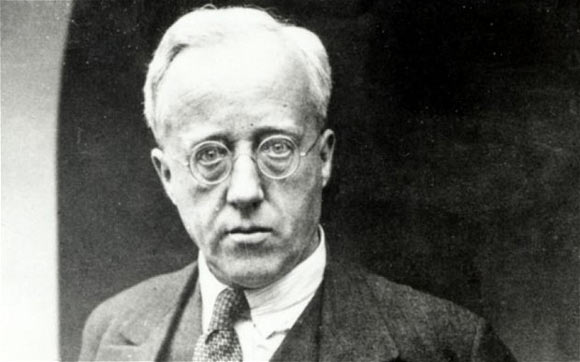
Gustav Holst was a British composer born in Cheltenham, England in 1874. Growing up, he fell in love with the piano, but due to neuritis in his hands, long hours of practice were painful. Because he still wanted to be involved in music as the son of an esteemed pianist, he picked up the trombone and later started to write his own music. He is known mainly for his longest composition, The Planets Suite. This seven-movement work is Holst’s representation of the character of each of the planets in the solar system and has had an influence on film scores today.
During the 1910s, Holst was feeling frustrated with his work; he failed to win a composition competition with his opera Sita, and his longer pieces, The Cloud Messenger and Beni Mora, were not as successful as he wanted them to be. In March of 1913, Holst received an anonymous gift which enabled him to travel to Spain, and there he became friends with an astrologist, Clifford Bax, who inspired Holst’s reborn interest in astrology from his childhood. He became an advocate of the subject and would often cast his friends’ horoscopes for fun.
Composers such as Igor Stravinsky and Arnold Schoenberg inspired Holst to compose The Planets; Mars, the first movement, is stylistically very similar to the works of Stravinsky, and Schoenberg impressed Holst with his Five Orchestral Pieces, Op. 18, which led Holst to label his work in progress as Seven Orchestral Pieces. The suite also includes the styles of late Russian romantic composers, Nikolai Rimsky-Korsakov and Alexander Glazunov.
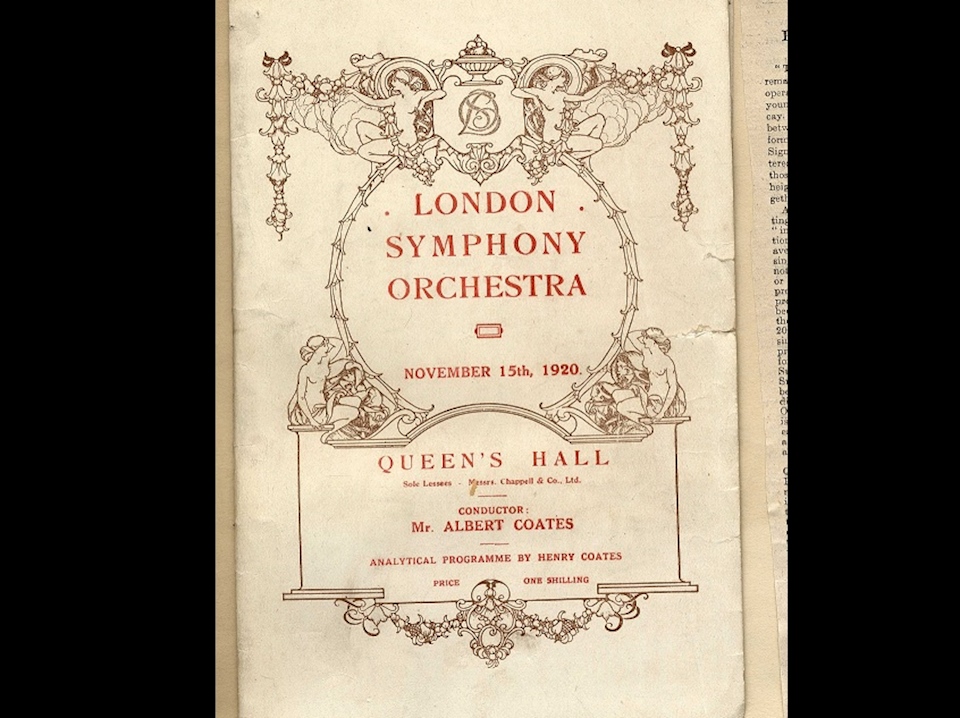
Although Holst completed the suite in 1916, the first public performance was not until November of 1920 by the London Symphony Orchestra. Since then, the piece has been widely performed and frequently recorded, both in individual movements and its entirety. The piece is written for full orchestra made up of strings, woodwinds, brass, and percussion, and Neptune includes parts for women’s choruses. A typical performance of the entire piece is about fifty minutes long.
Each movement of The Planets has its own title, subtitle, and astrological character. The first movement, Mars, The Bringer of War, is very heavy and war-like, and is often seen as one of the most devastating pieces of music ever written. It features the brass and percussion sections and is repetitive as it builds in intensity. Venus, The Bringer of Peace, contrasts with the first movement; it is very tame and relaxing. Mercury, The Winged Messenger, features the woodwind section, and has a flighty and lively character. Jupiter, The Bringer of Jollity, is the most famous movement, and it carries several themes including I Vow to Thee My Country. This movement is powerful, moving, and majestic. Saturn, The Bringer of Old Age, contrasts with Jupiter, being quite unsettling and expanding into a heavy march. This was Holst’s personal favorite movement of the suite. Uranus, The Magician, is boisterous and gallop-like, representing Uranus as the god of the sky. The final movement, Neptune, The Mystic, was originally written for organ, as Holst wanted to represent the mysterious glory of the planet. Neptune has beautiful harmonies, featuring the harp, and includes a choir that gives the piece an other-worldly quality.
The influences of The Planets are often heard in film scores, especially in John Williams’s works; the soundtrack of Star Wars was very much inspired by Holst and includes themes from several of the movements. Although this suite became Holst’s most popular composition, he believed it was overrated compared to some of his other works and did not count it as his best piece. He was, however, partial to his favorite movement, Saturn, and his other pieces grew in popularity as people became aware of his talent.

 Bach to the Future: The Evolution of Music