The Romantic Era was not only a movement in terms of music, but also a change in literature, visual art, and cultural norms as we transitioned into the Industrial Revolution. This era began in 1830 and lasted until about 1910, and was in part a revolt against the social and political norms of the Age of Enlightenment.
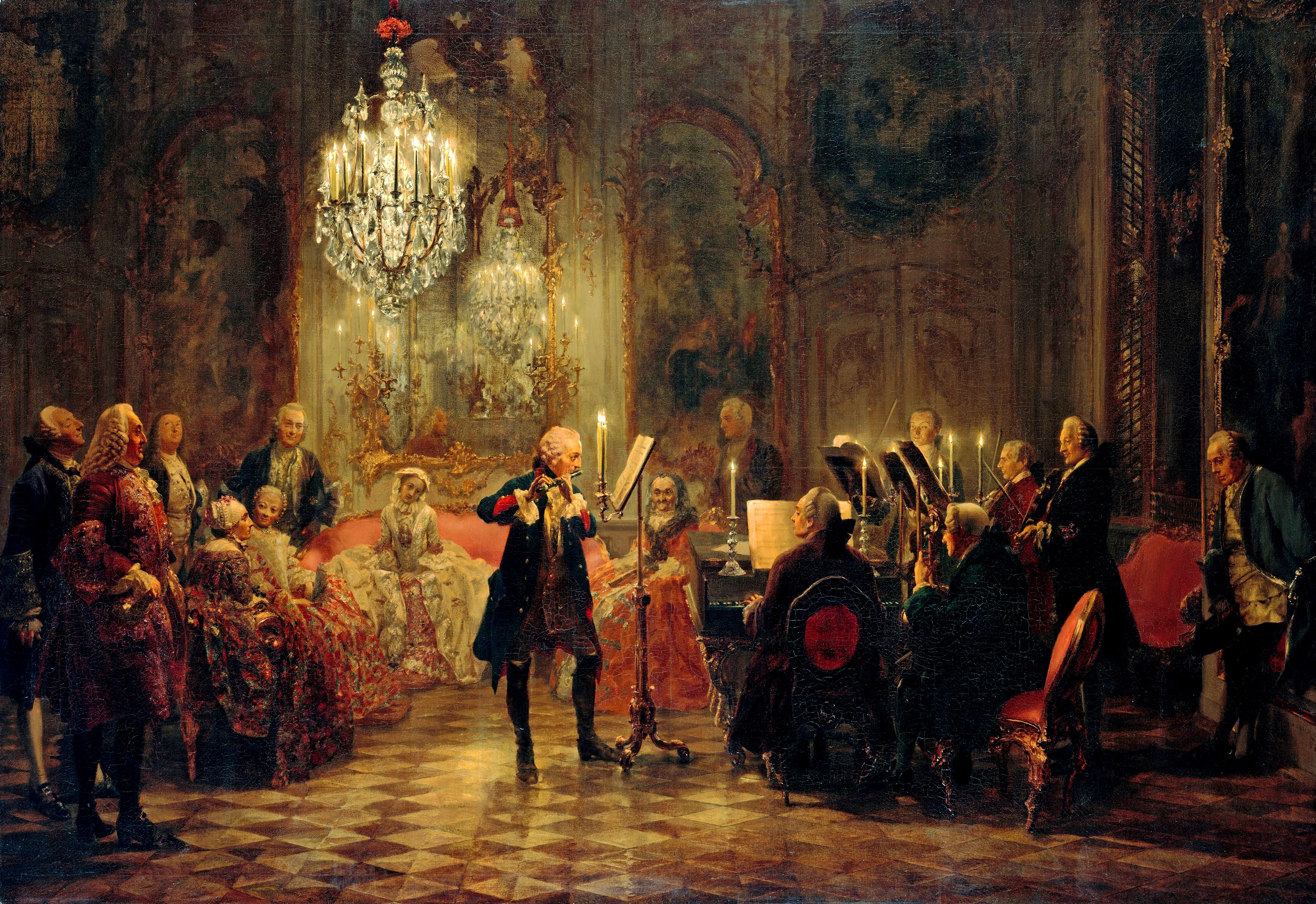
In terms of music, the Romantic era brought about much more expressive and programmatic music, and the size of the orchestra grew to include a larger winds section. The formal restraint of classical music was broken as public concert halls became popular in the middle class; in previous eras, these concerts were only a norm for the upper class and/or aristocrats.
The key elements of Romantic music were emotional expression, elaborate harmonic progressions and longer melodies, new structures and forms (such as the rhapsody, nocturne, and song cycle), and a change in emphasis of the instruments in an orchestra. The dominating type of work in this era was the symphony; typically four movements and the longest type of work, symphonies were able to express the characteristics of the period along with the expansion of the orchestra.
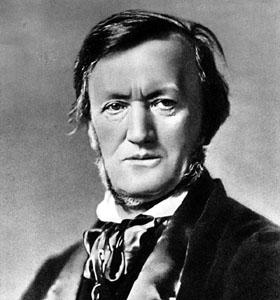
Compared to previous eras, there were several more composers who became popular in the Romantic era. Beethoven is seen as the transitioning composer between Classical and Romantic music; he died in 1827, just before the Romantic period, but his later works exemplify many characteristics of Romantic music. The earliest composers of this era include Chopin, Mendelssohn, Schumann, Liszt, and Berlioz, and later came Mahler, Wagner, Tchaikovsky, and Brahms, as well as many others. The later composers of this era were the heavyweights of Romantic music.
The Romantic era was one of the most influential eras of music, as it contrasted with society, unlike previous eras of music such as Baroque that were reflections of society. Performing a work from the Romantic era tends to be quite challenging, especially when they require double the amount of, for example, brass players than the typical orchestral piece. Romantic music has had an influence on almost all music that followed it, and it will continue to be a favorite in today’s music world.

 Bach to the Future: The Evolution of Music